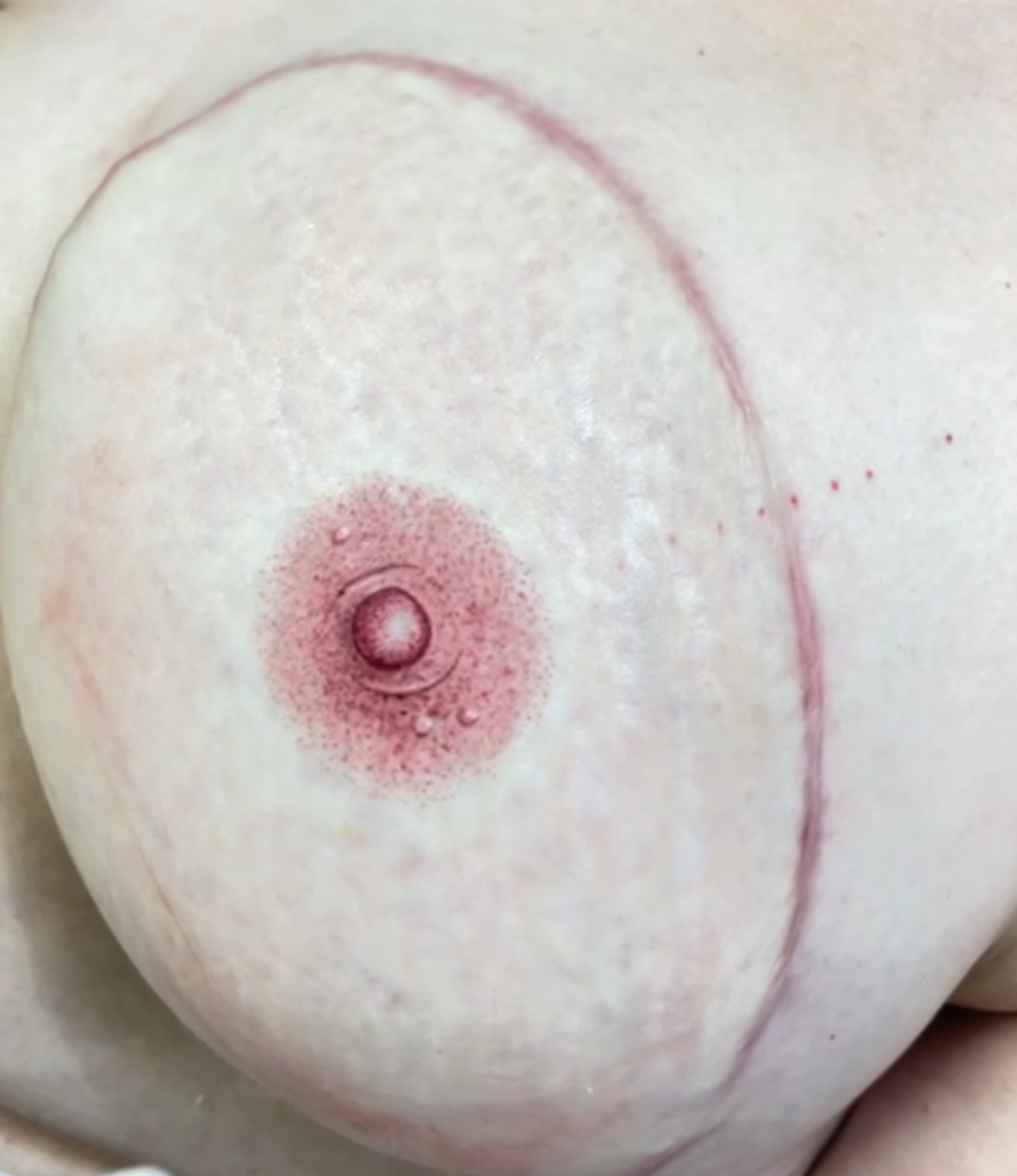
3D Nipple & Areola Tattoo After Mastectomy | Healing With Ink | Skarlet Leon Bournemouth

HomeJournal › Healing With Ink

Paramedical Tattoo  ·  3D Areola  ·  Bournemouth

Healing With Ink

— 3D Nipple & Areola Tattoo After Mastectomy

For breast cancer survivors, gender affirmation patients and anyone whose journey has changed the way their body looks — this is the final step. And it is a powerful one.

By Skarlet Leon  ·  Paramedical Tattoo Specialist  ·  Bournemouth

3D nipple areola tattoo after mastectomy — Skarlet Leon Bournemouth paramedical tattoo specialist

In 2020 the New York Times published a piece titled Ink Rx? — documenting how needles and pigments are helping medical patients heal emotionally. That phrase stayed with me. Because it captures something I see every single week in my studio.

Paramedical tattooing is not cosmetic in the traditional sense. It is restorative. It is the art of returning something to someone that surgery, illness or life took away. And for many of my clients, the 3D nipple and areola tattoo is not the beginning of their journey — it is the end of a very long one.

“You don’t understand until you’ve been through it. It really made me have a different outlook on life. It made me feel… complete. It really helped me to heal.”

A client — after her 3D areola tattoo

What is paramedical tattooing — and who is it for?

Paramedical tattooing uses the same technical foundations as cosmetic tattooing — pigment, needles, precision — but the purpose is entirely different. Where cosmetic PMU enhances, paramedical PMU restores. It works with the skin after surgery, trauma or medical treatment to rebuild what was changed or lost.

In my studio, this includes 3D nipple and areola tattooing for:

🎗️ Breast cancer survivors — after mastectomy and reconstruction, completing the journey
🌿 Gender affirmation — after top surgery, creating the body that reflects who you are
Areola enhancement — asymmetry, size, colour — anyone wanting improvement
💫 Radiation marker — that blue dot left after treatment — turned into a small freckle
🔬 Implant scarring — scar camouflage to blend and soften

The New York Times got it right. This is not vanity. It is healing. It is a woman standing in front of the mirror and seeing herself again — not the surgery, not the treatment, not the scar. Herself.

Tattoo vs surgery — my honest recommendation

As a paramedical specialist, I am often asked whether a client should choose nipple reconstruction surgery or a tattoo. My honest answer — in almost every case — is the tattoo.

Surgery uses skin grafts, often taken from the vagina or other body areas, to recreate a raised nipple. The outcome can be unpredictable. The graft can fall, the result can look unnatural — one client of mine described hers as looking like a worm. She was unhappy for years. Until she came to me.

Skarlet says

When a skin graft falls or fails, it is never the fault of the tattoo. The skin itself behaves unpredictably — particularly nipple skin, which contracts and relaxes constantly. This is why I always tell clients clearly: if a graft falls after tattooing, it is the skin, not the ink. The tattoo is not the problem. And in most cases, the tattoo was the better option from the start.
Surgery can be unpredictable. Even with excellent surgical care, a nipple reconstruction may not match the original, may not heal symmetrically, and may require further procedures. A 3D tattoo gives a beautifully realistic result — without general anaesthetic, without recovery time, and with the option to refine it whenever needed.
Real case — surgical graft vs tattoo result
Client unhappy with surgical nipple graft — corrected with 3D areola tattoo — Skarlet Leon Bournemouth
This client had a surgical nipple graft done during her reconstruction. The graft eventually fell and the result she was left with made her deeply unhappy for years. After her 3D areola tattoo with me she said it was the best decision she had ever made. The tattoo gave her what surgery could not.
Client chose tattoo over surgery — avoided skin graft from vagina — Skarlet Leon Bournemouth
This client had been through surgery and a prosthesis, and was facing the option of another procedure — a skin graft from the vaginal area to reconstruct the nipple. She chose the tattoo instead. Less pain. No surgery. A result she could see and feel good about immediately. She has never looked back.

The honest truth about nipple skin — what to know before you book

Nipple skin is one of the most technically challenging surfaces to tattoo. It contracts and relaxes constantly — which means pigment retention is less predictable than on flat, stable skin. The flatter the skin, the better the result. This is something I will always assess and discuss with you honestly before we begin.
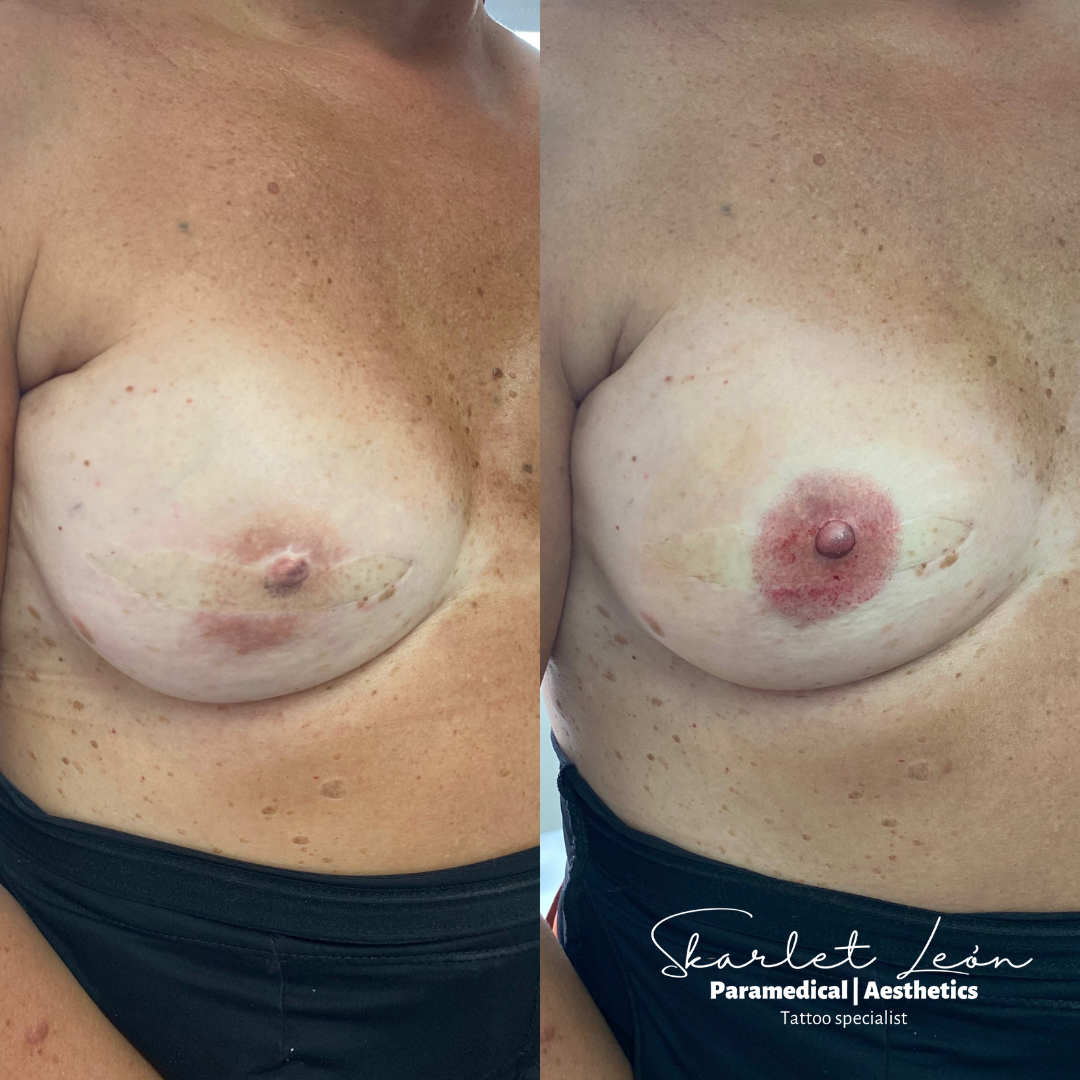
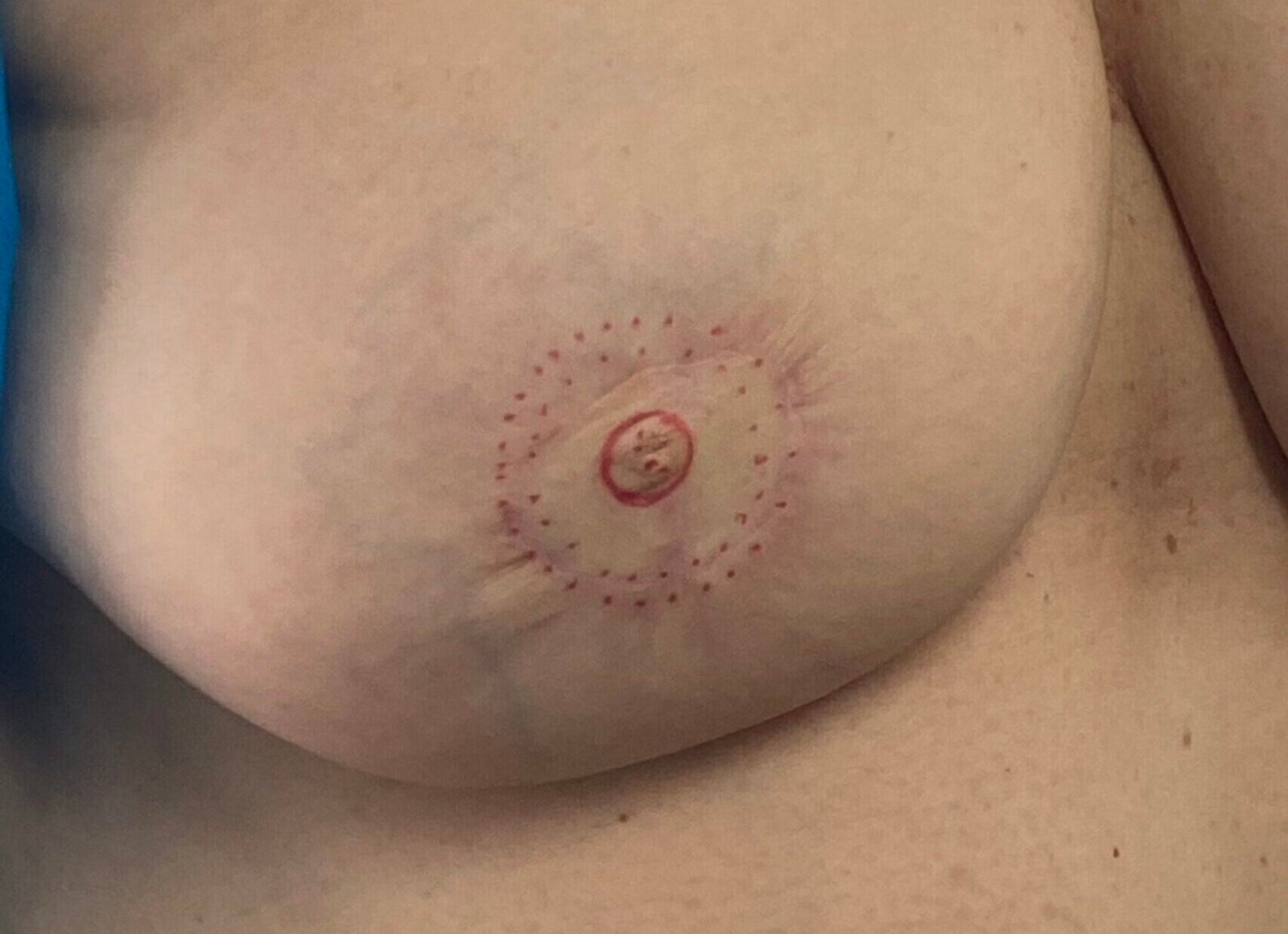
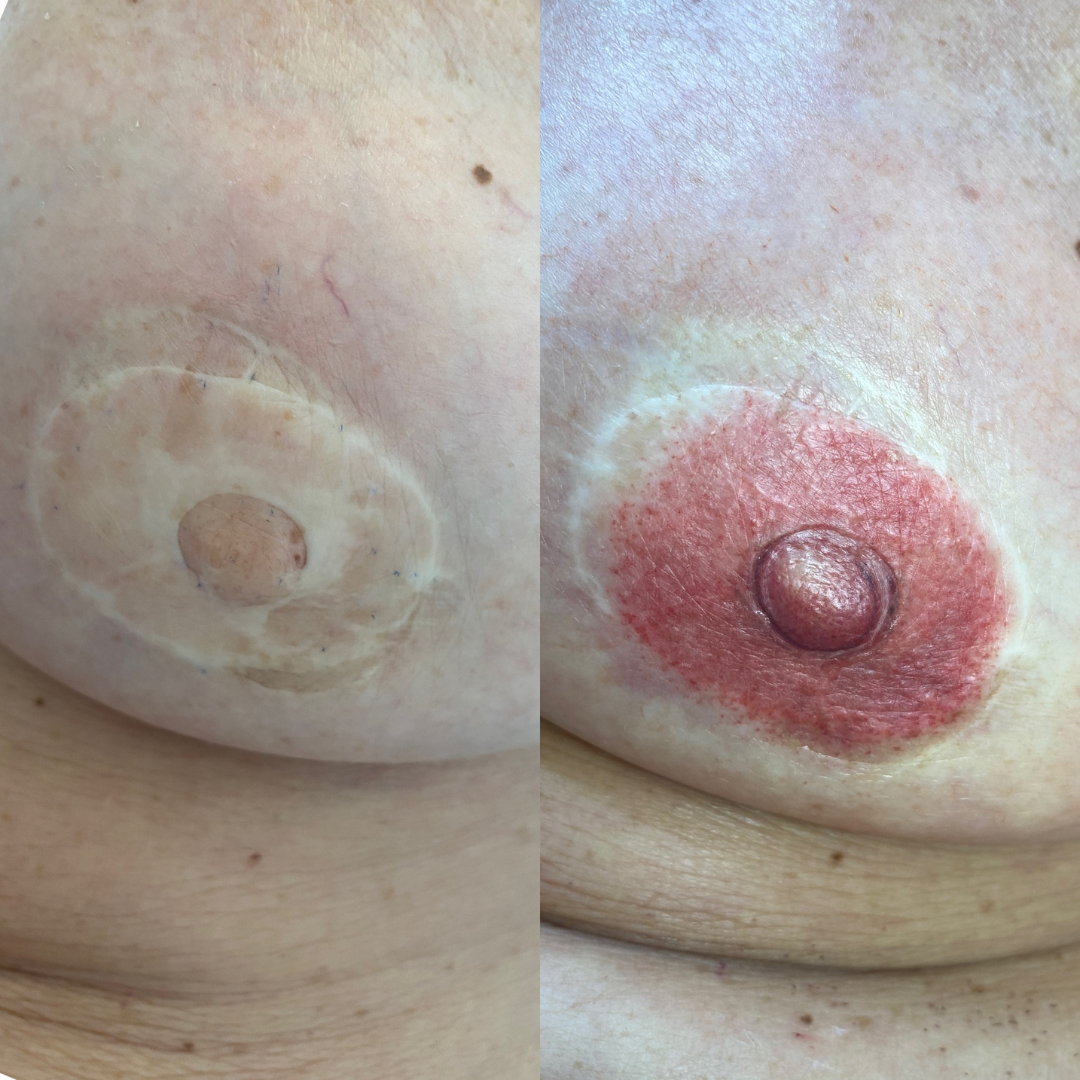
Remaining nipple skin after mastectomy — challenging for pigment retention — Skarlet Leon Bournemouth
Sometimes remnants of nipple skin remain after mastectomy. You can see the difference in skin texture here — the remaining nipple tissue retains pigment differently to the surrounding flat skin. This is not a problem. It simply means the approach is tailored. Flat skin — as much as possible — always gives the clearest, most lasting result.
Important to know

If you are seeking extreme definition on nipple skin, it may take several sessions — and even then, the result will always be clearer on flatter surrounding skin. I will never overpromise. What I will always give you is my honest assessment at consultation, my best technical work, and full guidance on what is achievable for your specific case.

Real results — what is possible
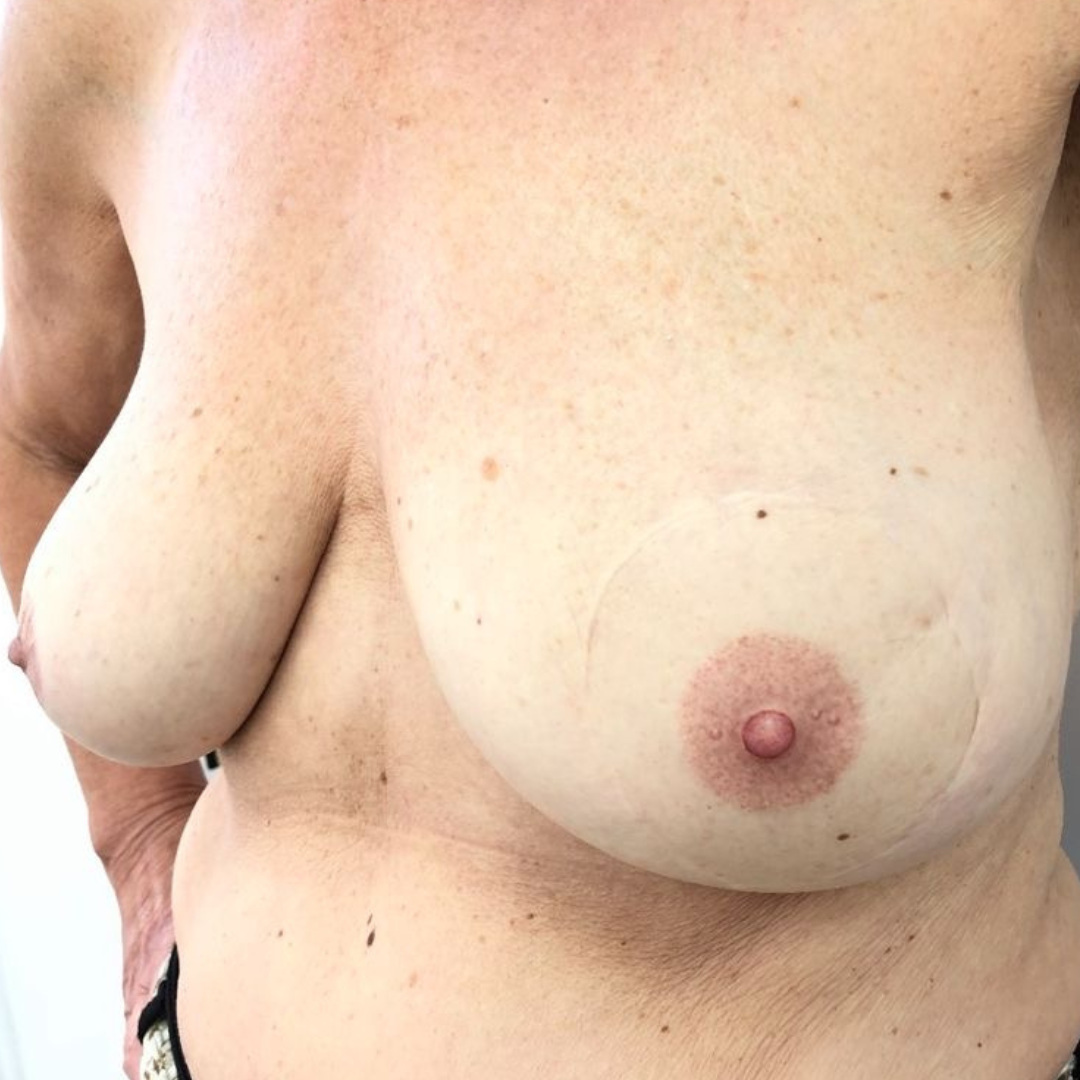
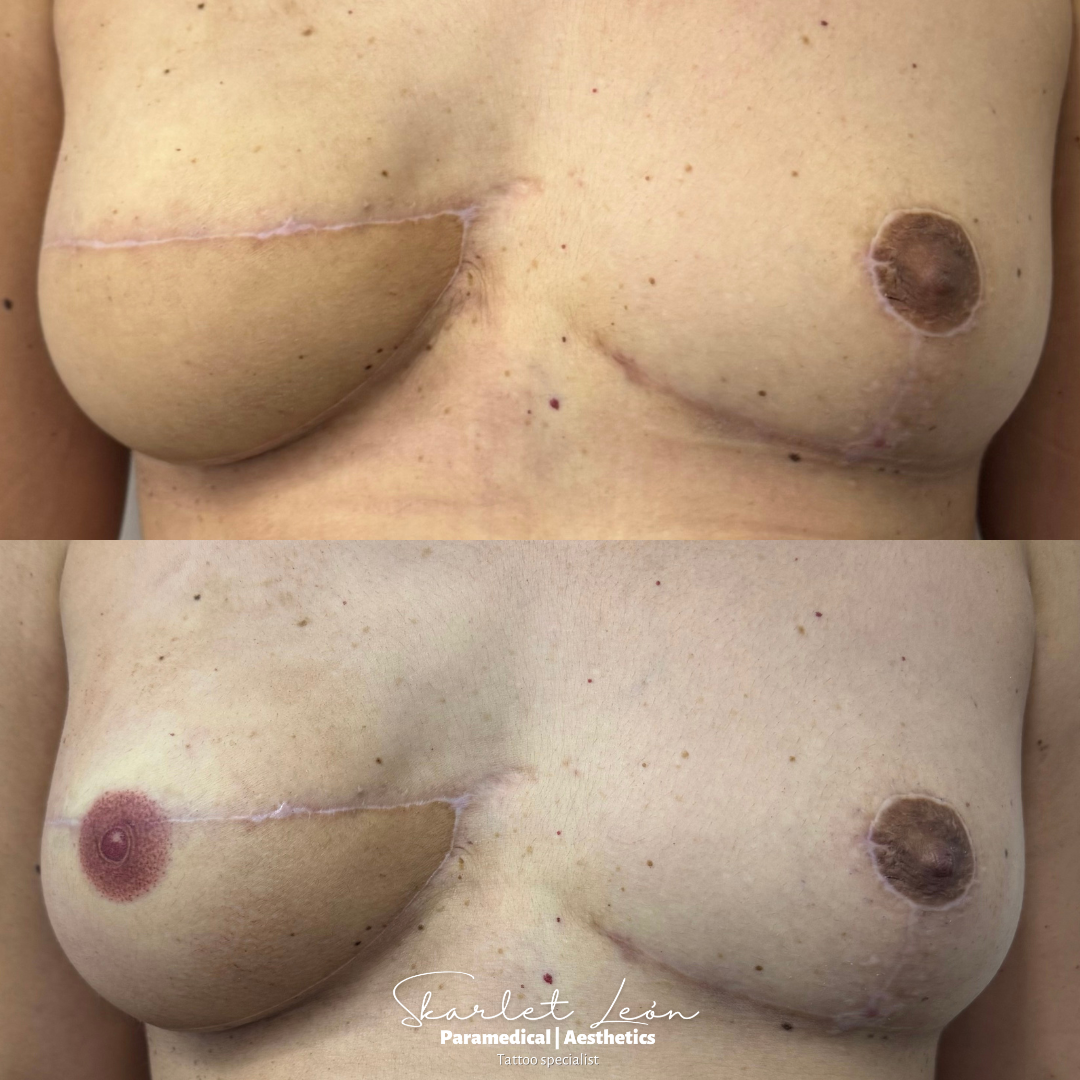
Flat skin — tattoo only
3D areola nipple tattoo result on flat skin after mastectomy — Skarlet Leon Bournemouth
3D nipple tattoo on flat skin after mastectomy. This is the result that is possible when the skin is smooth and settled. The shading, depth and colour create a completely realistic three-dimensional appearance.
Prosthesis — planning and drawing
Drawing nipple design on breast prosthesis — Skarlet Leon Bournemouth paramedical tattoo
Designing the areola on a prosthesis before tattooing. This is how I plan the shape, size and placement — ensuring perfect proportion before any pigment touches the skin.
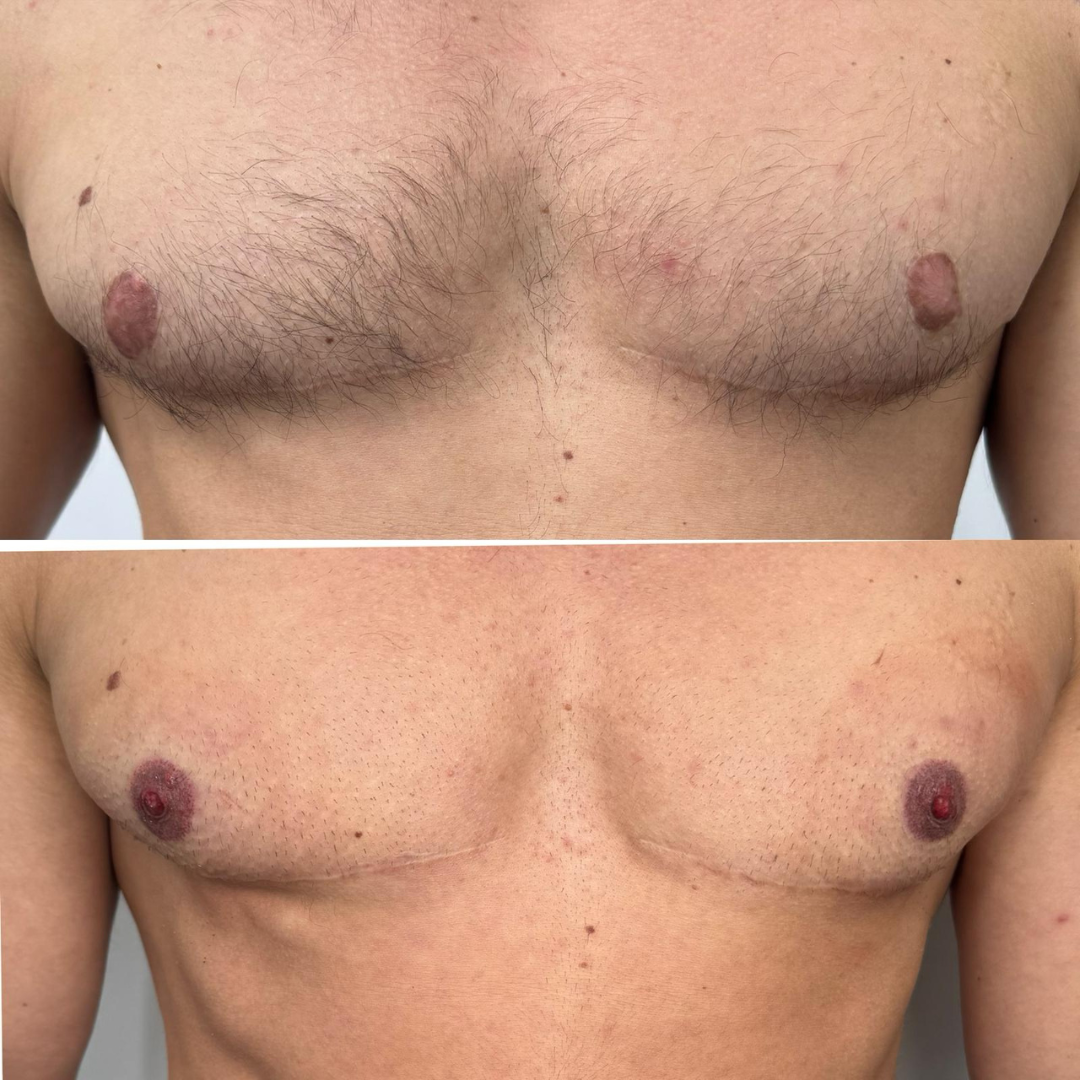
Gender affirmation — reshaping and defining
Gender affirmation areola tattoo — improving surgical result — Skarlet Leon Bournemouth
Gender affirmation case. This client was very unhappy with the surgical result — irregular, undefined, asymmetric. The tattoo significantly improved the shape and definition. Working on nipple skin is always more challenging than flat skin — but the improvement is clear and the client left feeling like themselves for the first time.

In the studio — what actually happens
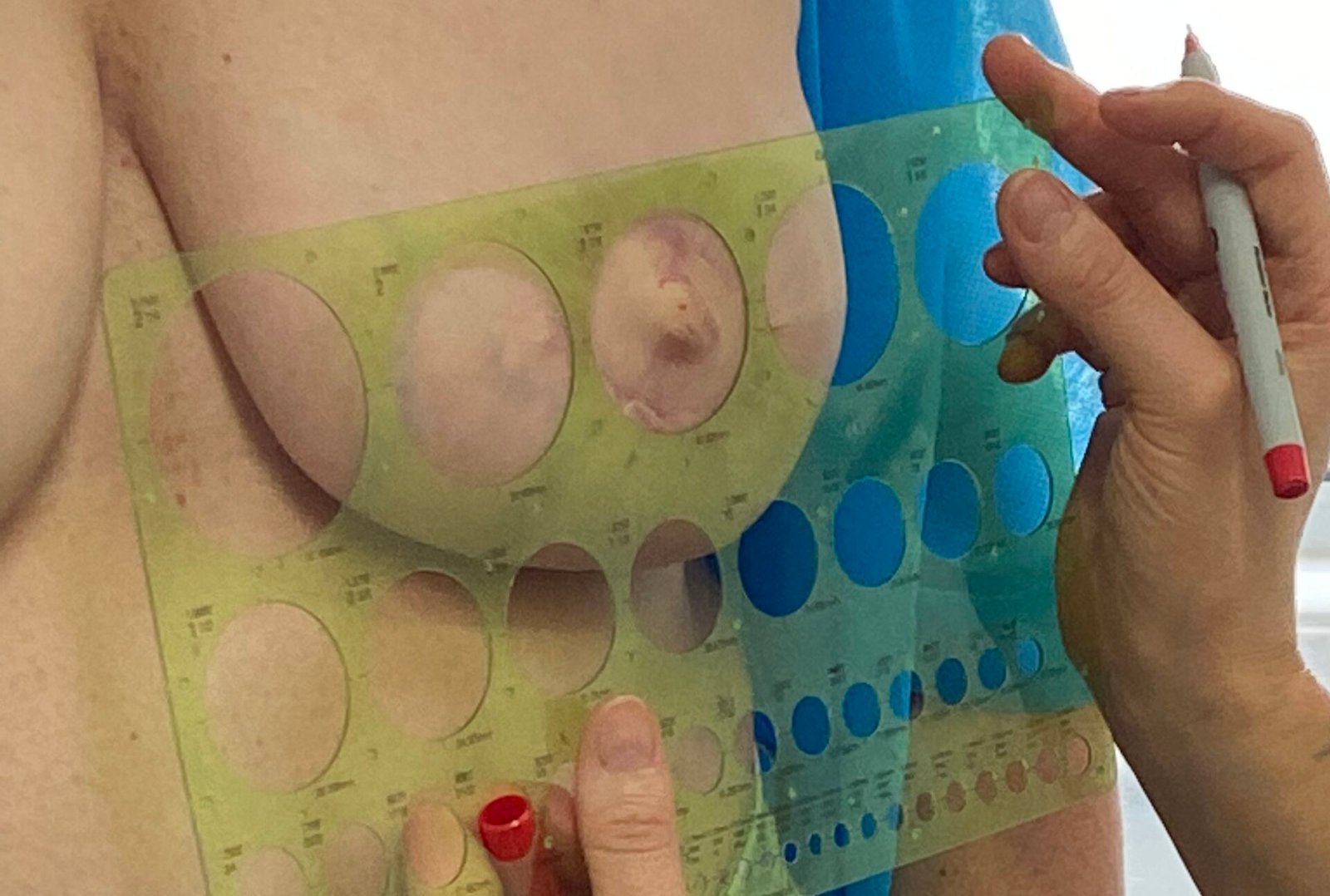
Measuring and mapping
Skarlet Leon checking measurements before nipple tattoo Bournemouth
Checking measurements. Proportion and placement are everything — I measure carefully before any design is committed to skin.
Skarlet Leon mapping nipple areola placement Bournemouth paramedical tattoo
Mapping the nipple placement. Every line is intentional. Nothing is guessed.
Working
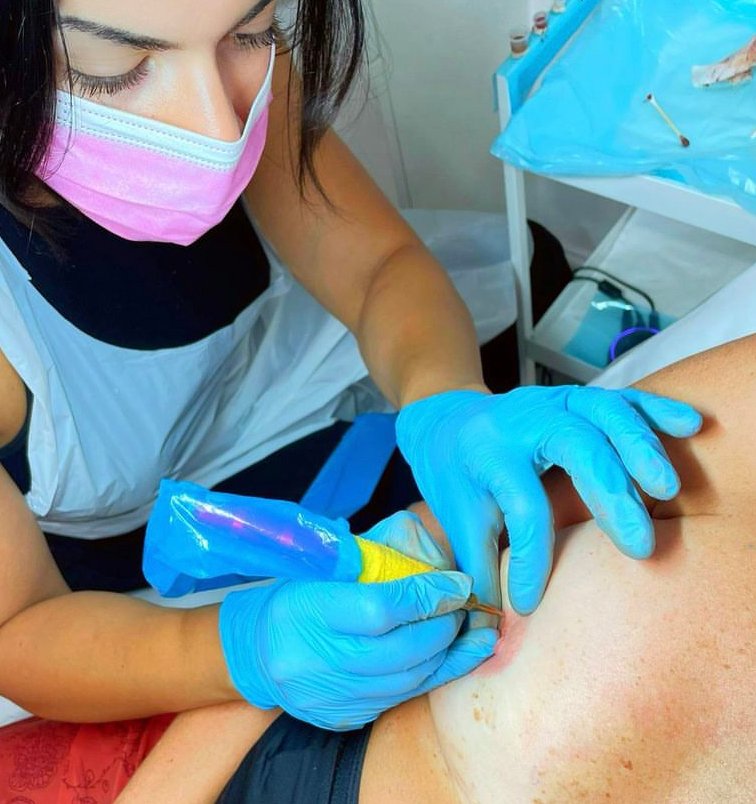
Skarlet Leon performing paramedical areola tattoo — Queens Park Bournemouth
In session. A calm, private and comfortable environment. The work is precise, steady and carried out with full respect for the journey every client has been through to get here.
Another completed work
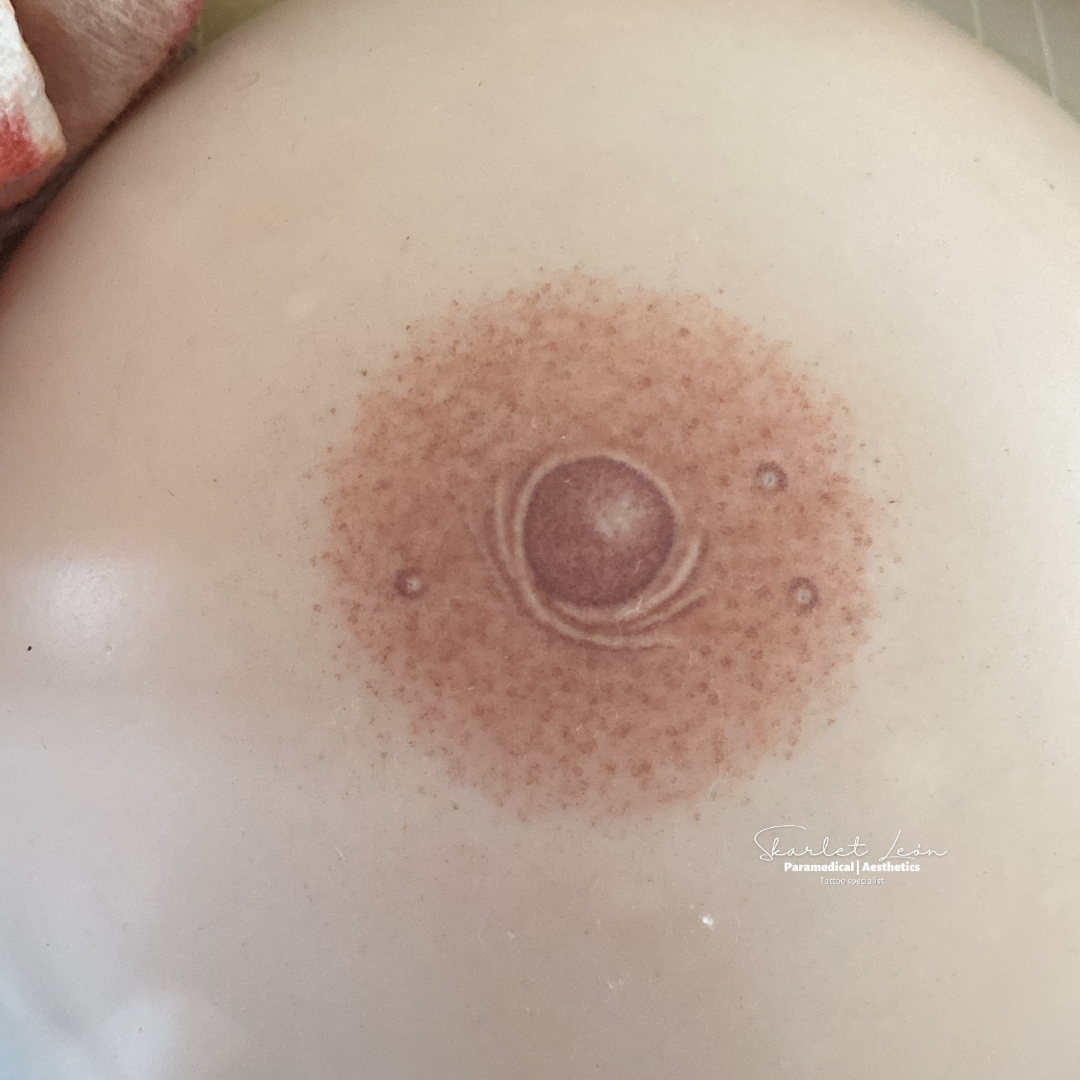
3D areola nipple tattoo result Bournemouth — Skarlet Leon
Completed 3D areola tattoo — realistic colour, depth and shape
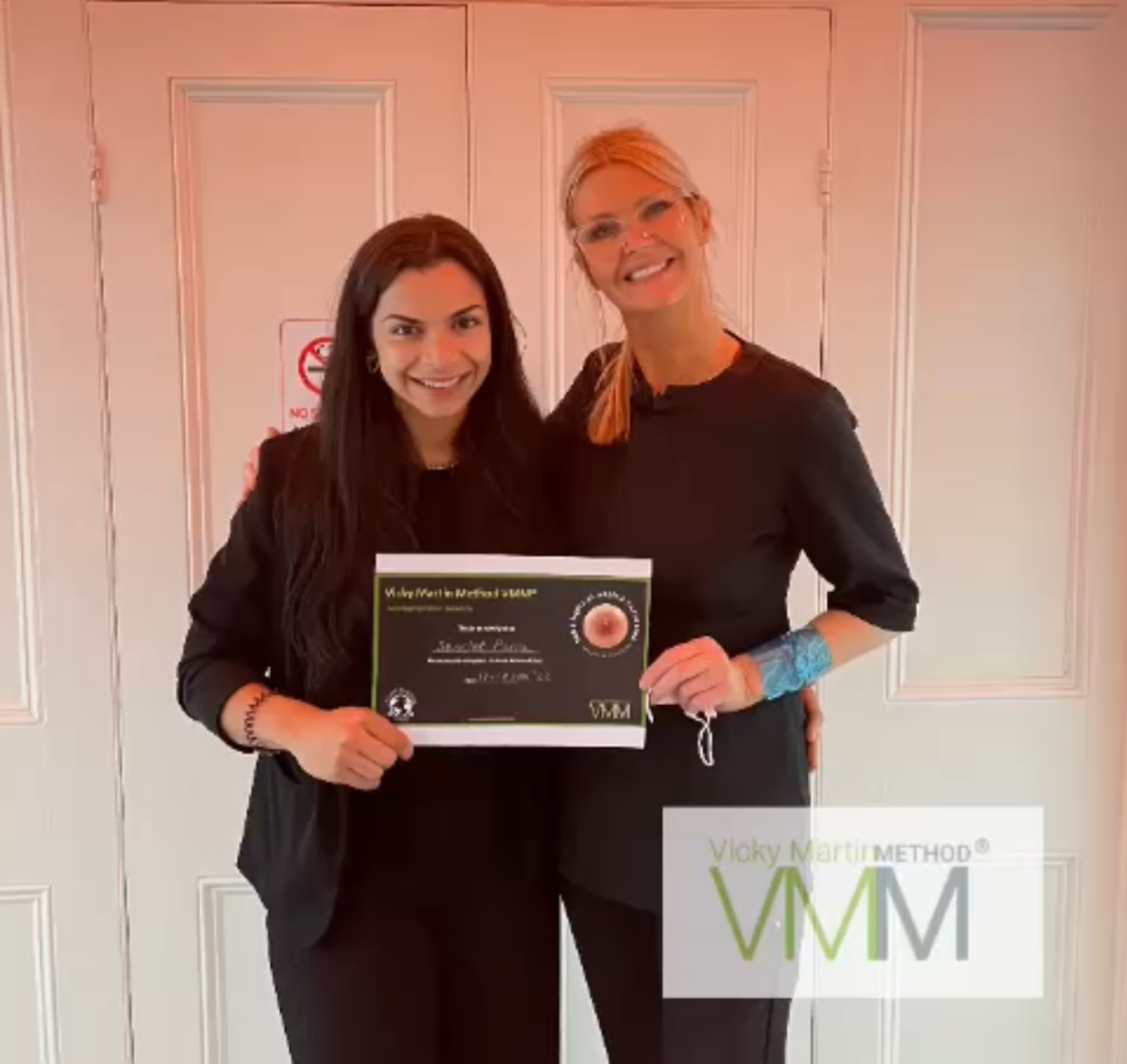
Skarlet Leon with Vicky Martin paramedical tattoo trainer
With Vicky Martin — internationally acclaimed VMM® method founder and my trainer in 3D areola tattooing

The pigments — UK-certified, premium quality

Pigments used in paramedical tattooing must go through an extensive preparation and compliance process to be approved for use in the UK. I use only premium-grade, certified pigments — because what goes into the skin matters enormously, particularly post-surgical skin.
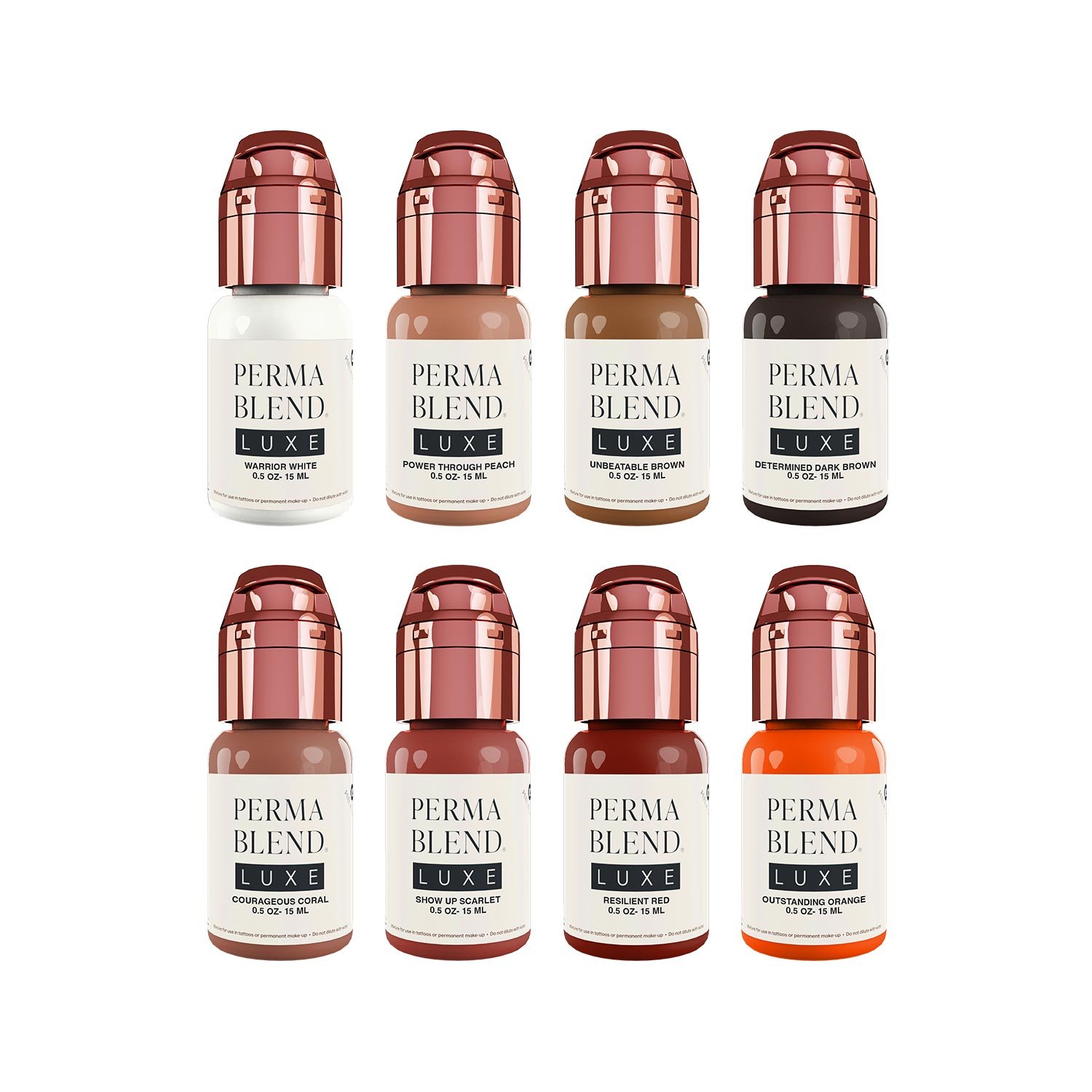
Luxe Vicky Martin UK certified areola pigments — Skarlet Leon Bournemouth
UK-certified Luxe Vicky Martin areola pigment set. These pigments are developed specifically for post-surgical and post-mastectomy skin — formulated to give maximum retention and true colour on compromised tissue. Every pigment used in my studio is compliant, certified and chosen for both safety and result quality.
On touch-ups

Unlike brows or lips, there is no set timeline for an areola touch-up. When you feel the colour has faded — whether that is 2, 3 or 5 years later — that is when we refresh it. The decision is entirely yours. There is no pressure and no fixed schedule. This is your result. You decide when it needs attention.

Trained by the best — the specialist knowledge behind the work

Paramedical tattooing requires a completely different understanding to cosmetic PMU. Post-surgical skin behaves differently. Scarred tissue has different porosity. Pigment retention varies enormously depending on the type of reconstruction, the skin tone, and how the individual body heals.

My training in paramedical tattooing is ongoing — this work demands constant development because every case is different, and the standard of care expected is the highest there is. My lead trainer in 3D areola tattooing:

What to expect — your questions answered

Does it hurt?
In most cases — very little. Post-mastectomy skin has often lost much of its sensation due to nerve damage during surgery. Many clients feel nothing at all, or only a very mild sensation. For clients with retained sensitivity, a topical numbing cream is applied beforehand. Most people are surprised by how comfortable it is.
How long do I need to wait after surgery?
A minimum of 6 months after your final surgical procedure, ideally longer. The tissue needs to be fully settled and stable before tattooing. Scars must be white or very light in colour — red or pink scars are still healing and cannot yet be treated.
How long does it last?
There is no fixed timeline. Pigment fades gradually over time — for some clients, 2 years; for others, 4 or 5. When you feel the colour has softened to a point where you want it refreshed, we simply book a touch-up. No fixed schedule. Your decision, always.
How many sessions does it take?
The process typically takes two sessions, spaced 6–8 weeks apart. The first session builds the foundation — shape, colour and depth. The second session assesses how the skin has healed and refines the result. On nipple skin specifically, more sessions may be needed for maximum definition.
Can keloid scars be treated?
No. Keloid scars cannot be treated with this procedure. If you are unsure whether your scarring is keloid, please send me a clear photo before booking — I will assess it honestly.
What about darker skin tones?
Darker skin tones can be more prone to hyperpigmentation and hypopigmentation — which can affect how the result heals. This does not mean treatment is impossible, but it does mean a thorough consultation and honest assessment are essential. Please send photos and we will discuss what is achievable for your skin.
Is my privacy protected?
Completely. Photos shared for consultation are treated with full confidentiality. Nothing is shared without your explicit permission. This is your journey and your body — your privacy is non-negotiable.

What happens after — the healing process

1
Immediately after
The treated area will appear red and the colour will look intense. This is completely normal. Redness subsides within 24–48 hours. A non-stick dressing is applied to protect the area.
2
First two weeks
The area may flake lightly as it heals. Do not pick or rub. Keep clean and dry. Avoid swimming, saunas and tight bras for the first two weeks. Follow the aftercare guidance provided exactly.
3
Weeks 2–6
Colour settles and softens. What looked bold immediately after will calm to a more natural result. The true healed colour is visible at 6–8 weeks.
4
The second session
At 6–8 weeks I assess how the first session has healed and make any necessary refinements. Colour adjustments, definition, any patchy areas — this is where the result is perfected. Appointments take 1–2 hours.
“This is not a cosmetic procedure. It is the final chapter of a story that has taken everything. And it is my privilege to help write it.”

Aftercare — how to protect your result

The session is my work. What happens in the days and weeks after is yours — and it matters enormously for how well the pigment retains and how cleanly the skin heals. The principle is simple: keep it clean, keep it covered, and do not let it dry out.
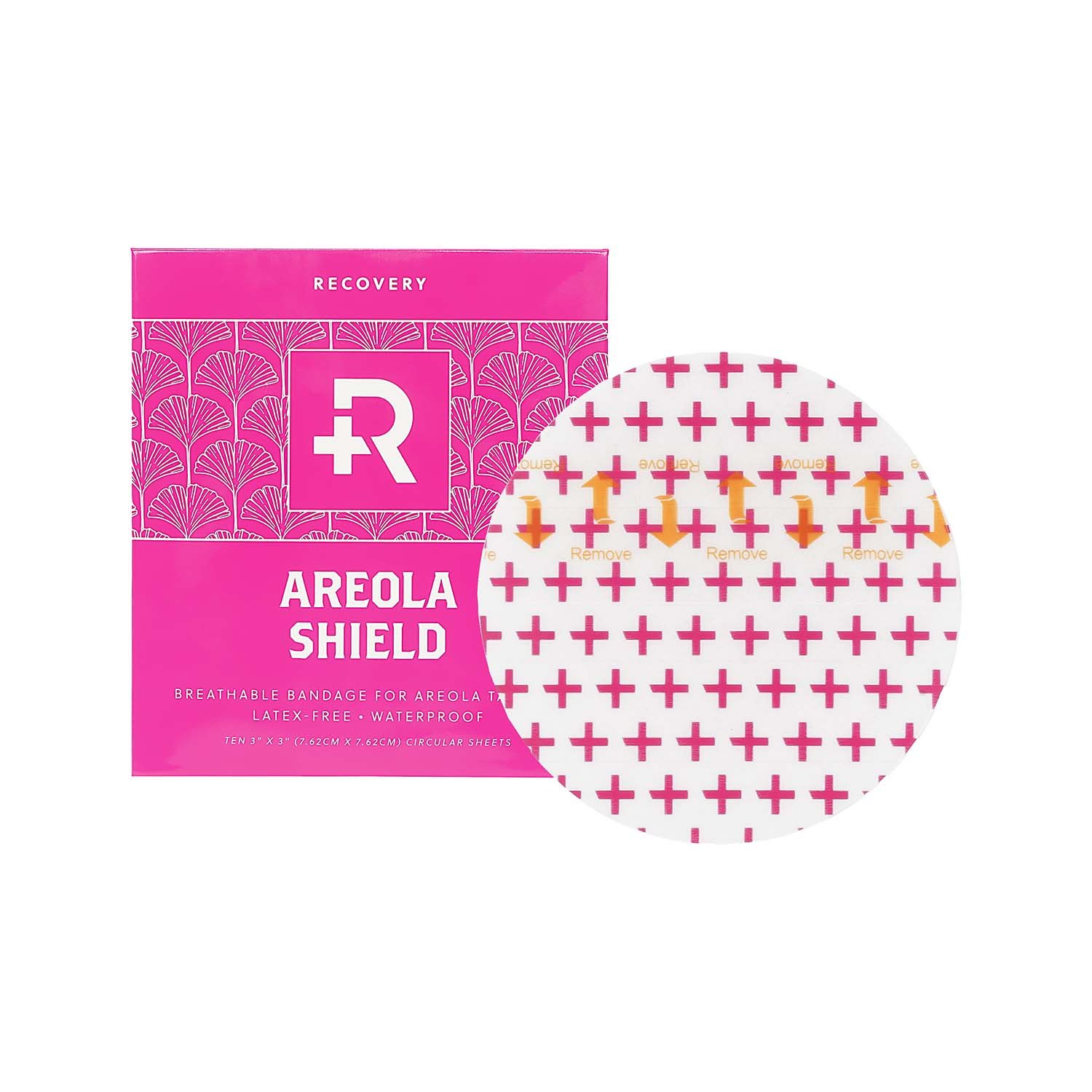
The golden rule of areola aftercare: Pigment that dries out is pigment that is lost. Keep the area protected and moisturised throughout the healing process — never leave it exposed to the air for more than 15 minutes at a time.
Recovery areola healing shield plaster after 3D nipple tattoo — Skarlet Leon Bournemouth
Areola recovery shield. A specialist waterproof plaster applied immediately after the session. Shower-proof, protective, and designed specifically for post-tattoo nipple healing. You will leave your appointment with this in place — leave it on for the full 7 days.
Days 1–7 — Leave the plaster on
🚿
Cleaning — morning and night
Boil the kettle and allow the water to cool completely. Gently bathe the areola with clean cooled water. Pat dry carefully — never rub.
💧
If fluid builds up under the plaster
Remove the plaster in the shower and allow clean water to run gently over the area. Pat dry, apply the healing balm provided, and apply a fresh plaster. Do not leave the area uncovered for more than 15 minutes.
🩹
After cleaning — balm and cover
Apply the aftercare balm provided and cover with a fresh plaster or food wrap (cling film). This keeps moisture in and protects the pigment from drying out — which is essential for retention.
Do not pick or pull
If the skin flakes or peels, leave it alone. Picking pulls pigment out with it and causes patchiness. Let it heal on its own terms.
Day 7 onwards — Remove plaster, continue balm
🌊
Remove in the shower on day 7
Allow warm water to run over the plaster — this softens it and makes removal much more comfortable. Never pull the plaster off dry.
🧴
Balm morning and night — for a further 7 days
Continue applying the healing balm twice daily for the second week. If the skin still feels tender, you can continue covering with cling film to protect against clothing friction.
For 14 days after your appointment — avoid completely:
✕ Swimming   ✕ Saunas   ✕ Long baths or showers   ✕ Tight or lacy bras against the area
✕ Sun exposure directly on the treated skin   ✕ Makeup or skincare products on the area
✕ Holidays or swimming pools within 4 weeks
Some redness immediately after is completely normal. If redness persists beyond 24 hours or you notice any unusual swelling, warmth or discharge — contact me directly or speak to your GP. Do not wait.
On consent and medical information

Before your appointment you will receive and sign a full consent form covering the procedure, pigment use, anaesthetic sensitivity, healing process and aftercare responsibilities. This is a medical procedure — full informed consent is required before we begin. If you have any current medications, skin conditions or health changes since your last surgery, please let me know at consultation. All information is kept strictly confidential.

Ready to take the final step?

Send me a photo on WhatsApp. I will give you an honest assessment — what is possible for your specific case, what to expect, and what the process looks like from here. Completely confidential.

Message me on WhatsApp